
our design Process
from an Artist’s lens
-Xavier Pereira, Lead Designer at Basin
Designing with Intent
At Basin, design isn’t just about choosing finishes — it’s about telling a story through space, light, materiality, and function. Much like the way paneled millwork becomes an architectural framework that shapes both form and utility in a room, our design process is structured to move from abstract inspiration to refined resolution in a way that feels intuitive, collaborative, and purposeful.
Why Process Matters
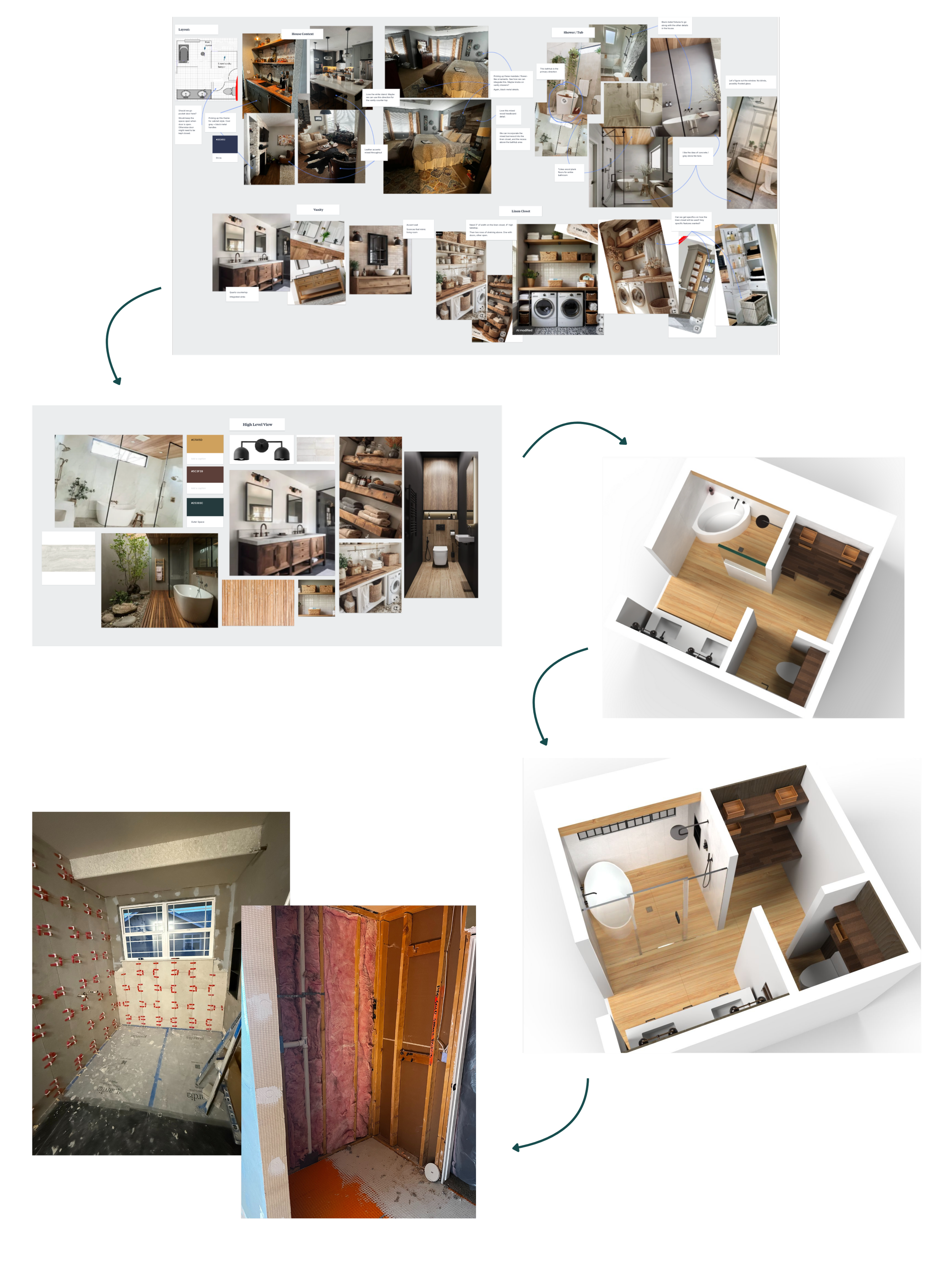
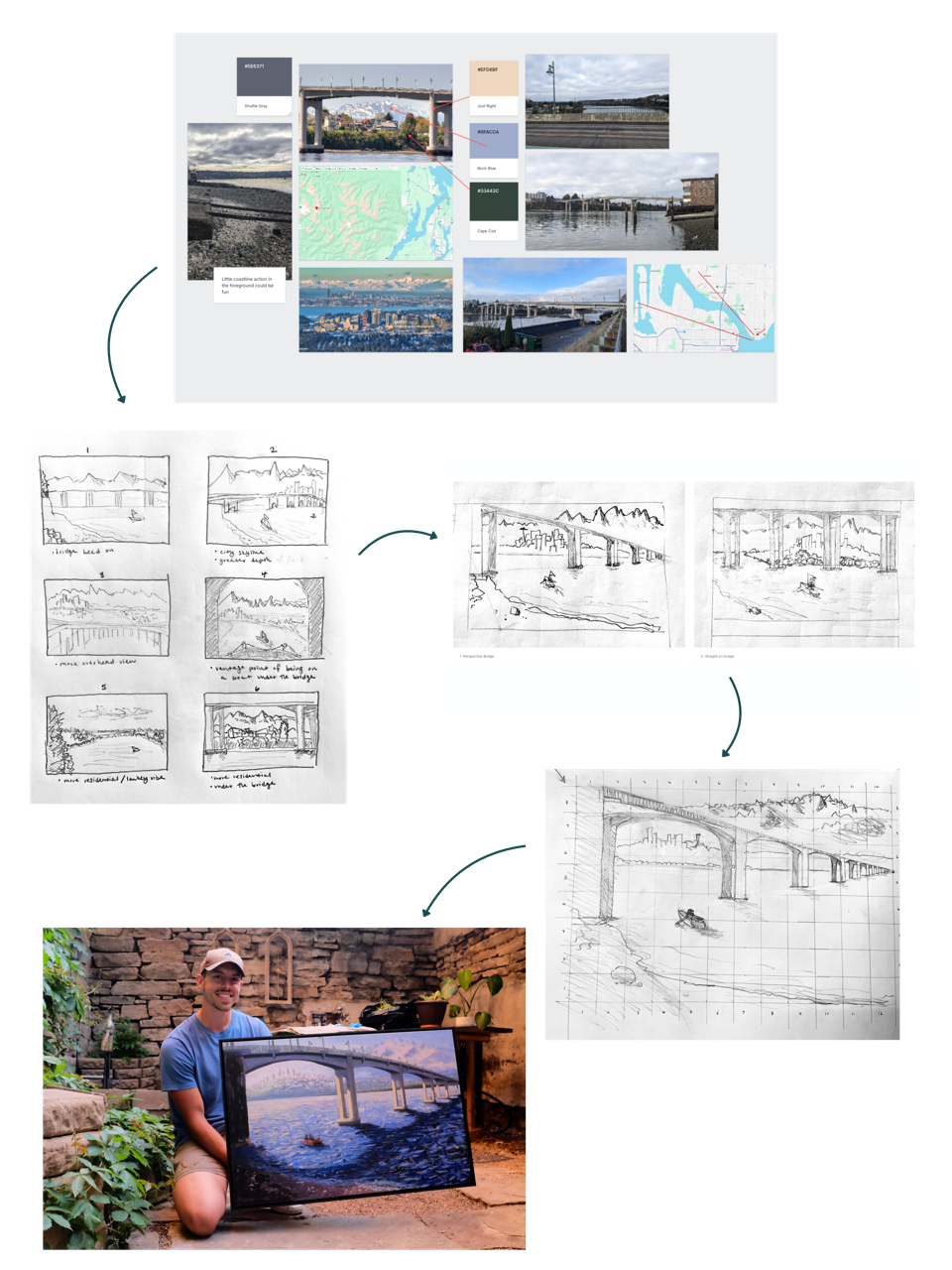
Good design emerges not from luck, but from intentional progression — from inspiration to iteration to realization. As both a practicing artist and interior designer, everything I do is fully intentional with the client in mind. Whether I’m crafting a painting or refining a bathroom concept, the core of my work is rooted in discovery, iteration, and communication. In my art commissions, this means building a visual story through moodboards, sketches, and proofs. In Basin’s design work, the same principles apply — just with different deliverables being materials selections and fully rendered 3D models.
Gathering inspiration: The moodboard phase
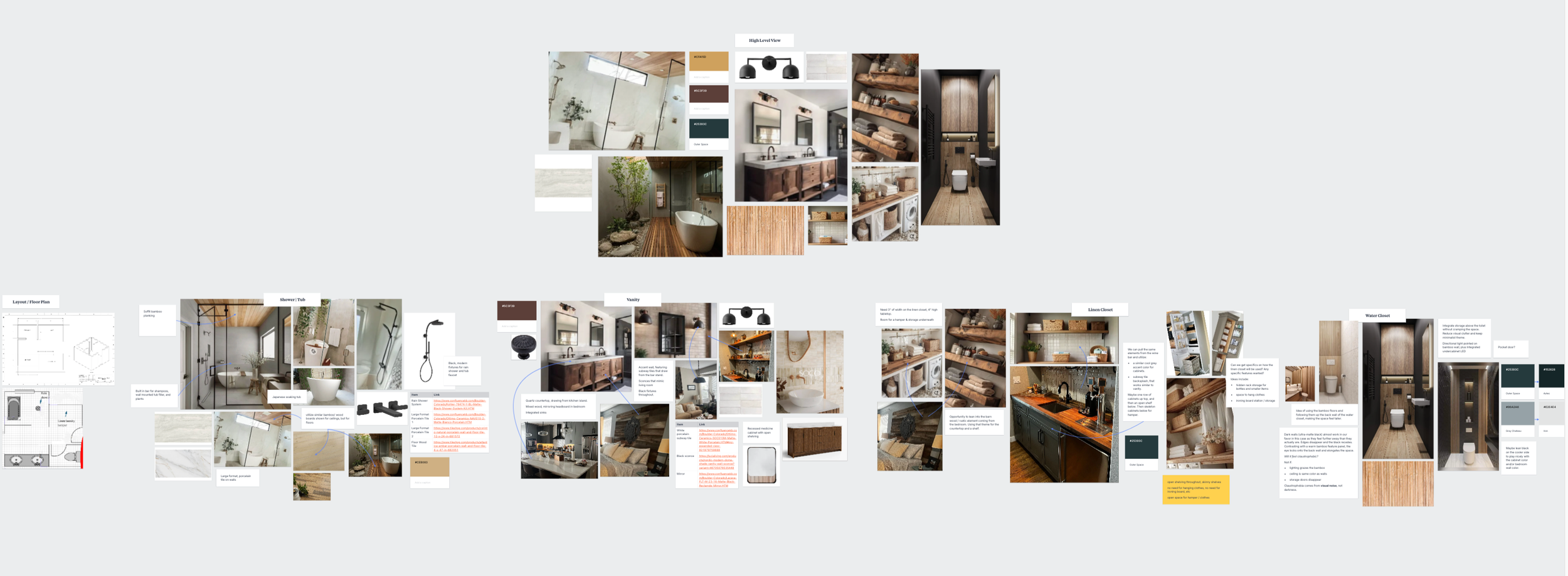
Every project begins with a moodboard. Much like selecting reference photos for a painting commission, the goal here is to translate feeling into visuals — a palette, materials, forms, and spatial intentions that convey the design direction.
At this stage, I assemble imagery and materials that communicate the aesthetic and functional cues we want the space to embody — whether that’s serene minimalism, layered material richness, or subtle architectural detailing embedded into cabinetry or nooks.
This phase gives everyone on the project a shared visual language and helps prevent miscommunication as we move into more technical design.
In-Context References
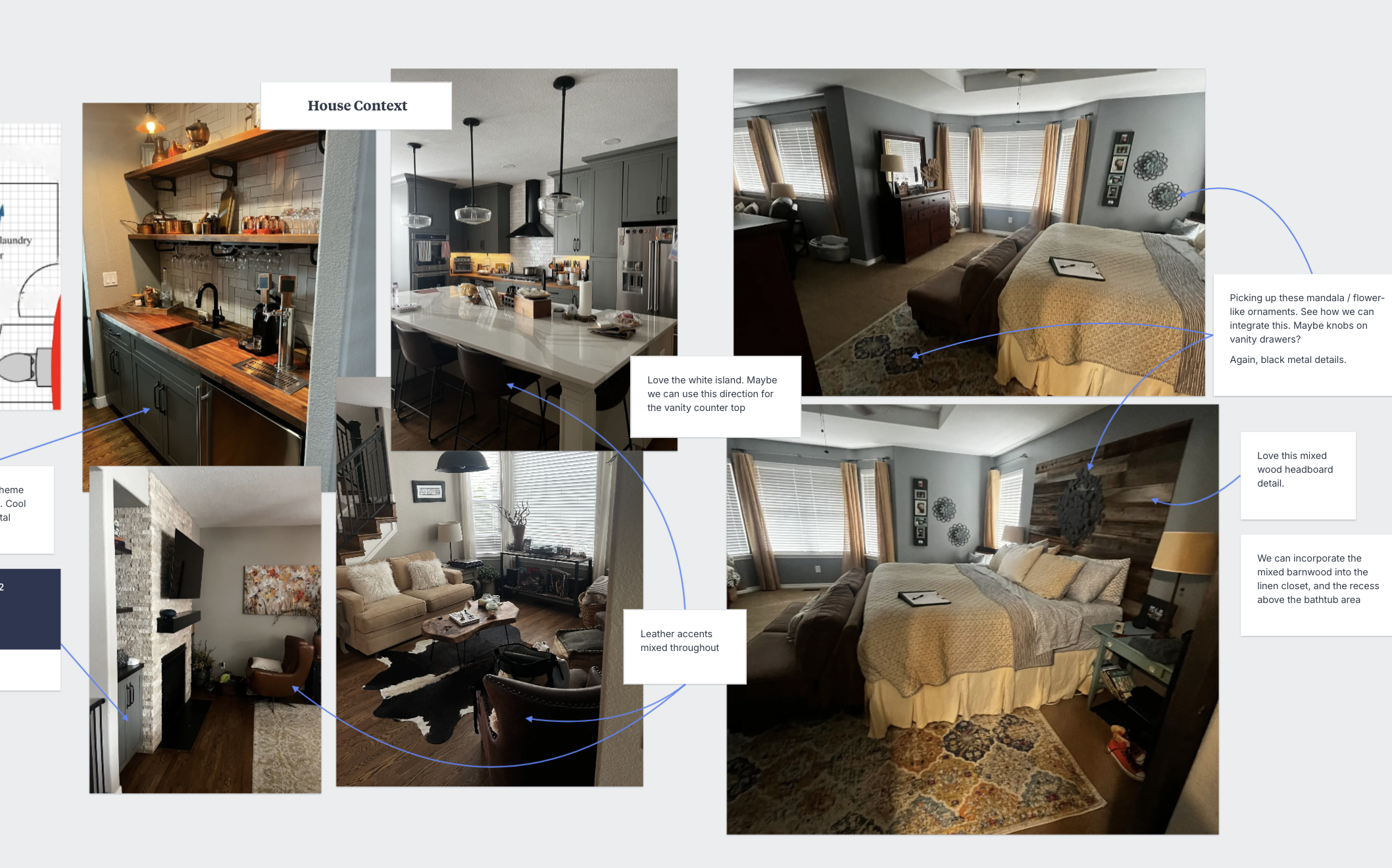
Sometimes inspiration is right in front of us. When the part of the design intent is to integrate the bathroom with the rest of the house, we can use those elements as the conceptual foundation.
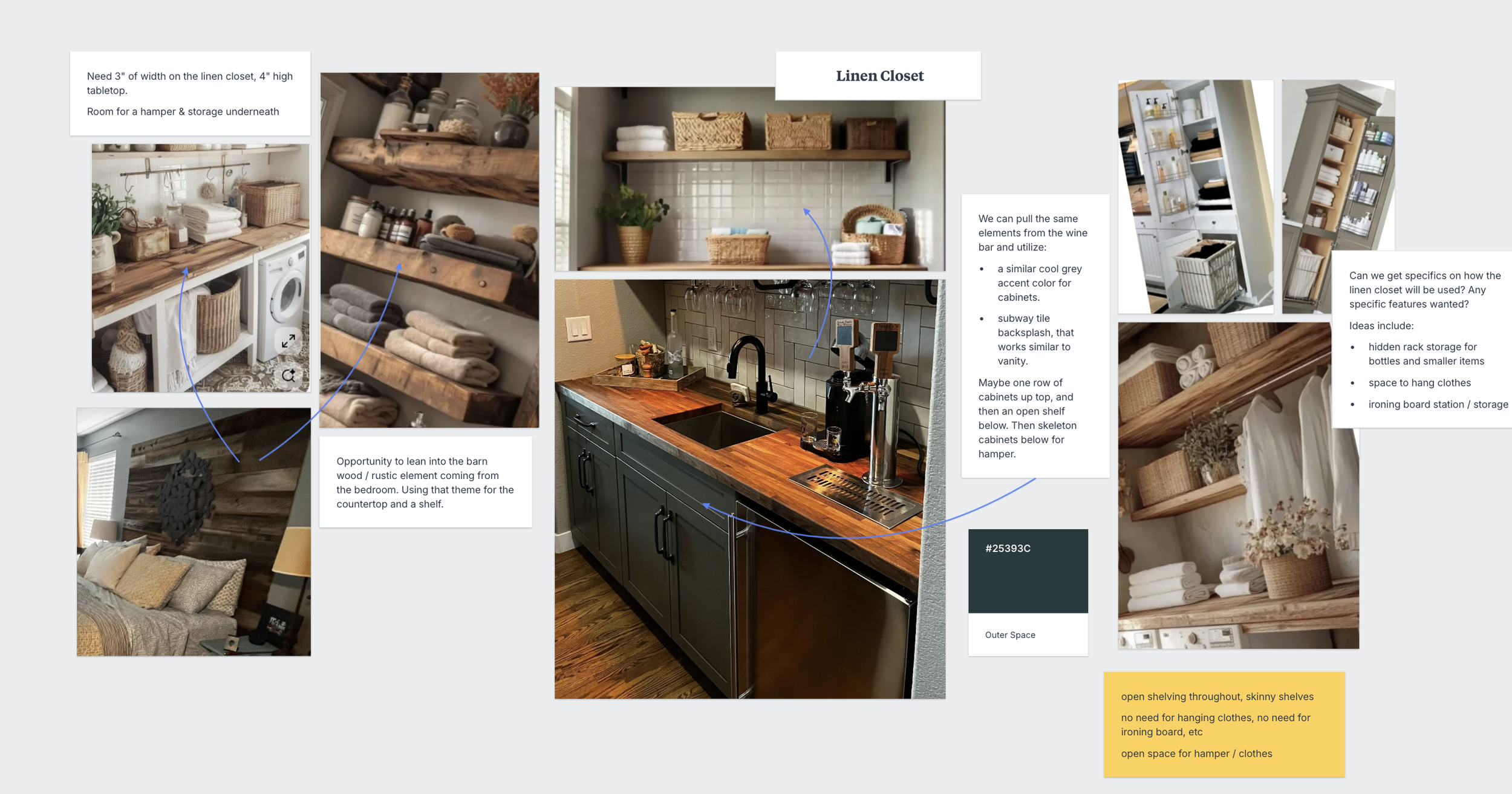
Connecting the dots
Our moodboarding process shows exactly where ideas came from, allowing the client full transparency and a shared canvas to work from.
Conceptual Iterations:
Beginning to Define the Space
Once we have a shared sense of mood and direction, we move into conceptual iteration — the design equivalent of rough sketches. For Basin projects, this means preliminary plan layouts and exploratory material pairings in CAD, where ideas can be tested, adjusted, and refined.
In both art and design, iteration is where the concept starts to take shape. Early ideas will evolve, merge, and sometimes fall away entirely — and that’s part of the value. It’s during this stage that we ask the tough questions: How should this space feel when you step in? How does the lighting emphasize texture? How will everything fit in the space? Rendering these concepts visually in 3D gives clarity to answers that words alone cannot.
Refining Composition:
Feedback & Collaboration
Collaboration is essential. Just as I update clients with work-in-progress snapshots during a painting (explaining what I’ve done and why), Basin’s design process invites feedback as early visualizations come into focus.
This ensures that the final design feels co-authored — not just produced for you. We refine proportion, material transitions, and functional elements together, elevating good ideas into thoughtful solutions that balance beauty with performance.
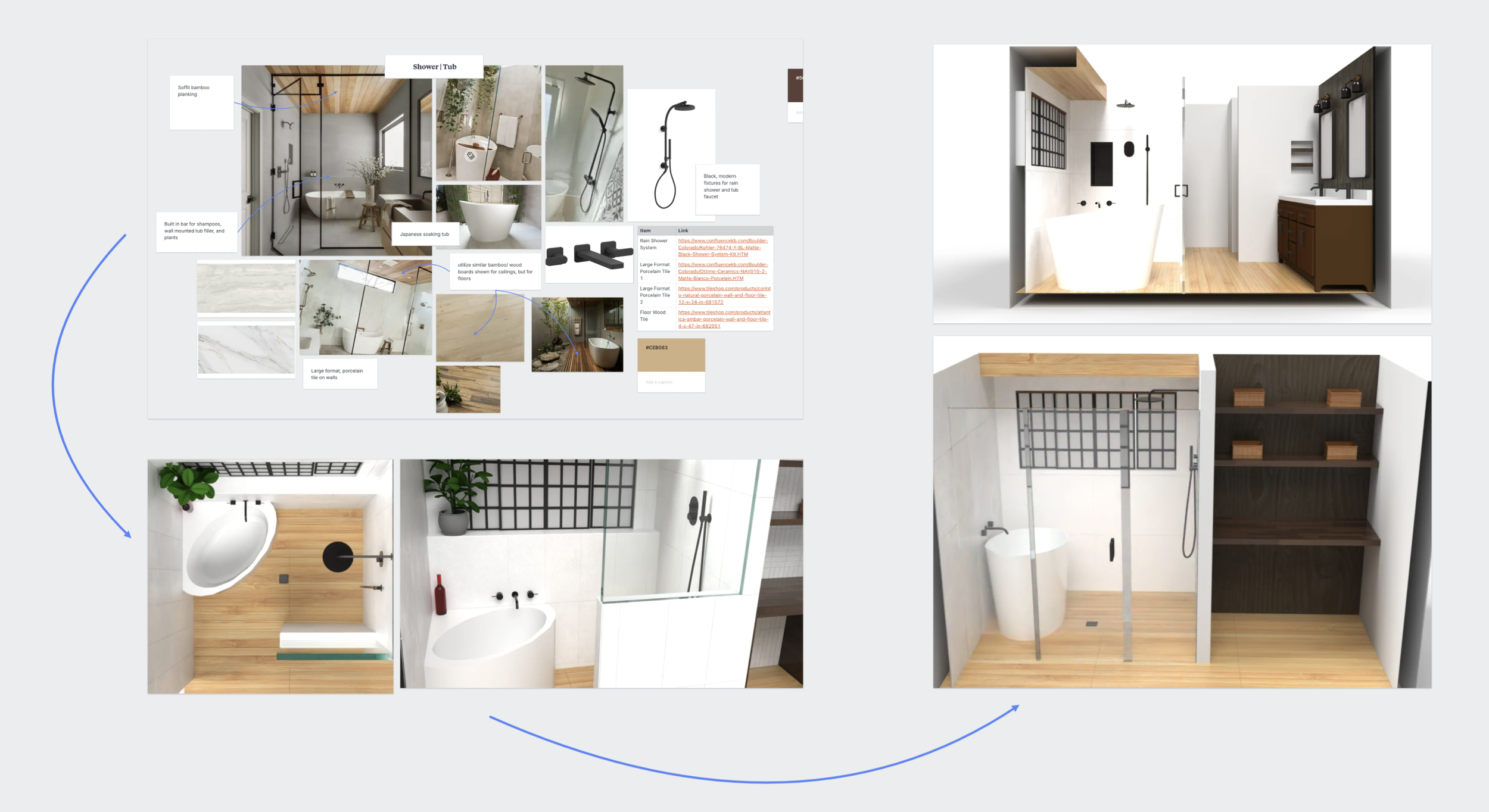
Conceptual Progression: Here’s how a concept might evolve over time as we learn more about the requirements of the space, and where feedback from the client informs the solution.
Final 3D CAD Rendering:
A Complete Vision
Once the design direction is locked in, it’s rendered in high-fidelity 3D CAD — our version of a “final proof on paper.” These renderings aren’t just pretty pictures; they’re immersive previews that help you understand how light, scale, and detail work together before construction begins.
Just like a paper proof allows fine detail adjustments before paint touches canvas, a detailed CAD rendering lets you feel the space and functionality long before the first demolition or installation.
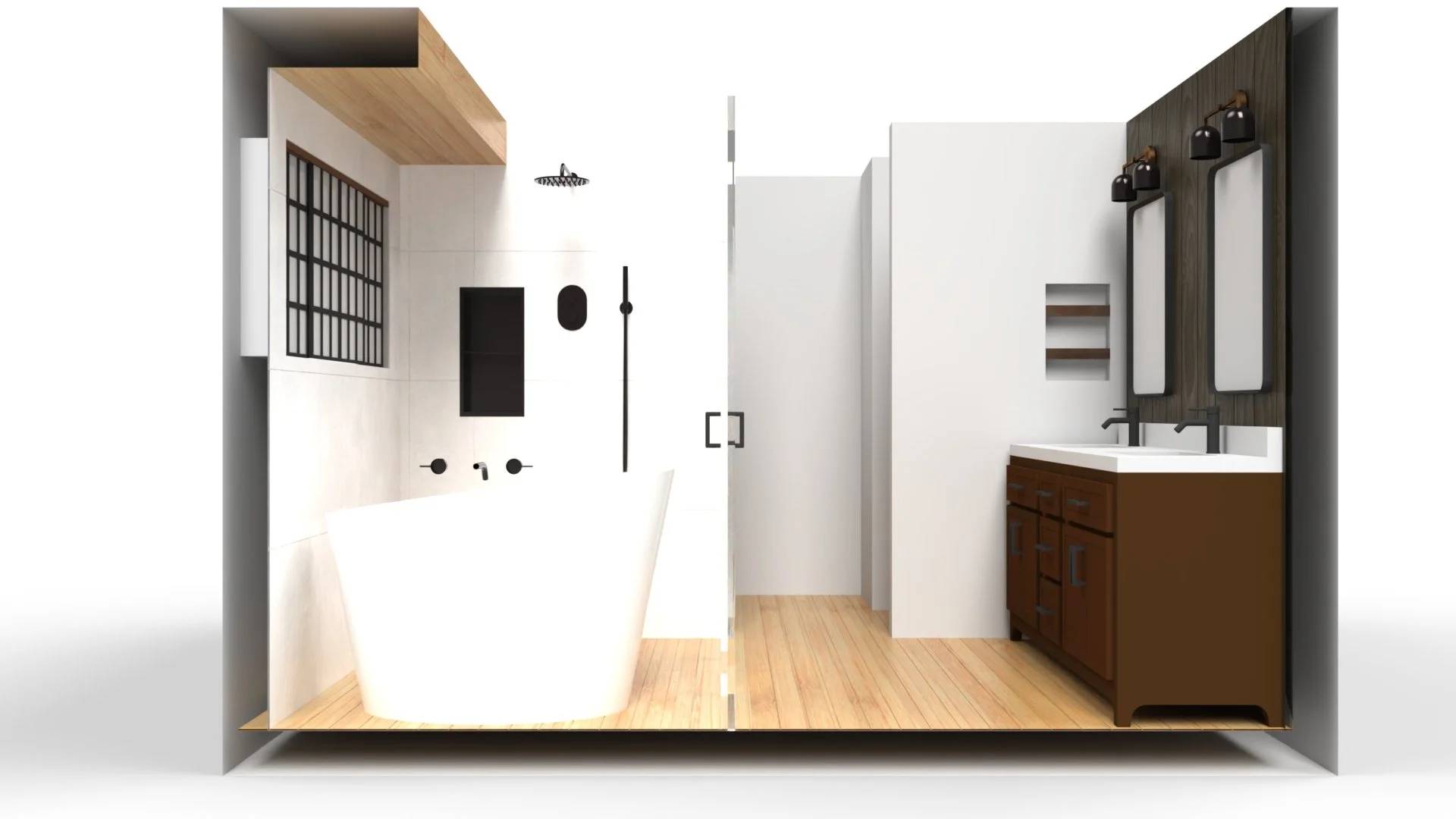
A final 3D CAD rendering of the bathroom.
Crafting Experiences Beyond the Surface
At the end of the day, good design — whether in a painting or a bathroom — is about experience, connection, and meaning. It’s about shaping environments that feel intuitive and timeless, where every decision is intentional, every material has purpose, and every detail contributes to the whole.
I’m honored to bring the same depth of thought and creative rigor to Basin projects that I bring to my art — and I look forward to continuing to explore these intersections between form and function, inspiration and execution.