
How to Find and Honest and Reliable Contractor for Your Home Remodel?
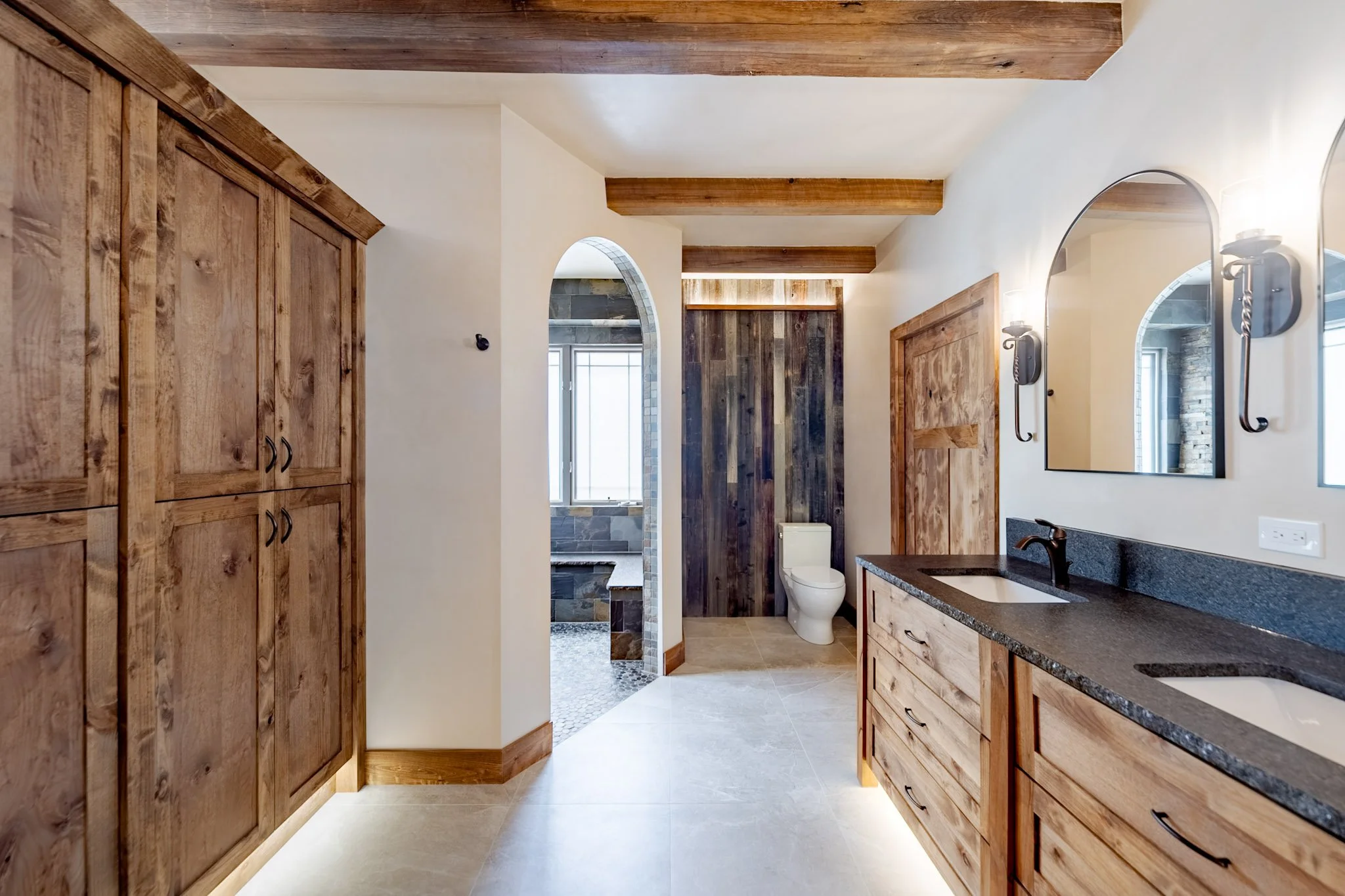
A homeowner's guide from someone who's spent years designing, managing, and building remodeling projects.
TL;DR:
Hiring the right remodeling contractor isn't about finding the lowest price, it's about finding someone you can trust with one of the biggest investments you'll make in your home.
Here's what I recommend:
Research contractors before requesting estimates.
Compare scope, not just price.
Ask contractors to explain how they'll build your project, not just what it'll look like.
Pay attention to communication during the sales process. It usually reflects how they'll communicate during construction.
Look for a well-defined process, realistic timelines, and confidence backed by experience.
Remember, a contractor works for you. Ask questions, expect clear answers, and don't be afraid to advocate for yourself.
If you remember only one thing from this article, let it be this:
Great craftsmanship is the baseline. The real difference is how a company manages everything around it.
Key Takeaways
An experienced contractor should confidently explain budgets, timelines, and their process.
A lower estimate doesn't necessarily mean a better value, it may simply include less.
Most remodeling failures happen behind the finished surfaces, where homeowners can't see them.
The remodeling experience matters just as much as the finished room.
Good contractors welcome educated homeowners and thoughtful questions.
Clear communication before the project is one of the strongest indicators of how the entire remodel will go.
One of the Most Expensive Bathroom Remodels I Ever Worked on Wasn't Actually a Remodel…
It was a reconstruction.
A homeowner had recently purchased a beautifully flipped home. Everything looked great on the surface.
Until the shower started leaking into the basement below.
When we opened everything up, we found a traditional mortar bed shower built incorrectly. The PVC shower pan liner had been installed flat on the subfloor instead of over a properly sloped mortar bed. Water had nowhere to drain, so it collected inside the mortar bed, wicked into the surrounding walls, and eventually found punctures in the liner where it escaped into the framing below.
The shower looked beautiful.
The craftsmanship hidden beneath the tile was the problem.
Unfortunately, there wasn't much this homeowner could have done to prevent it because the work had been completed before they purchased the house.
That project reinforced something I now tell every homeowner:
The hardest part of remodeling isn't building a beautiful bathroom. It's knowing who to trust before the work ever begins.
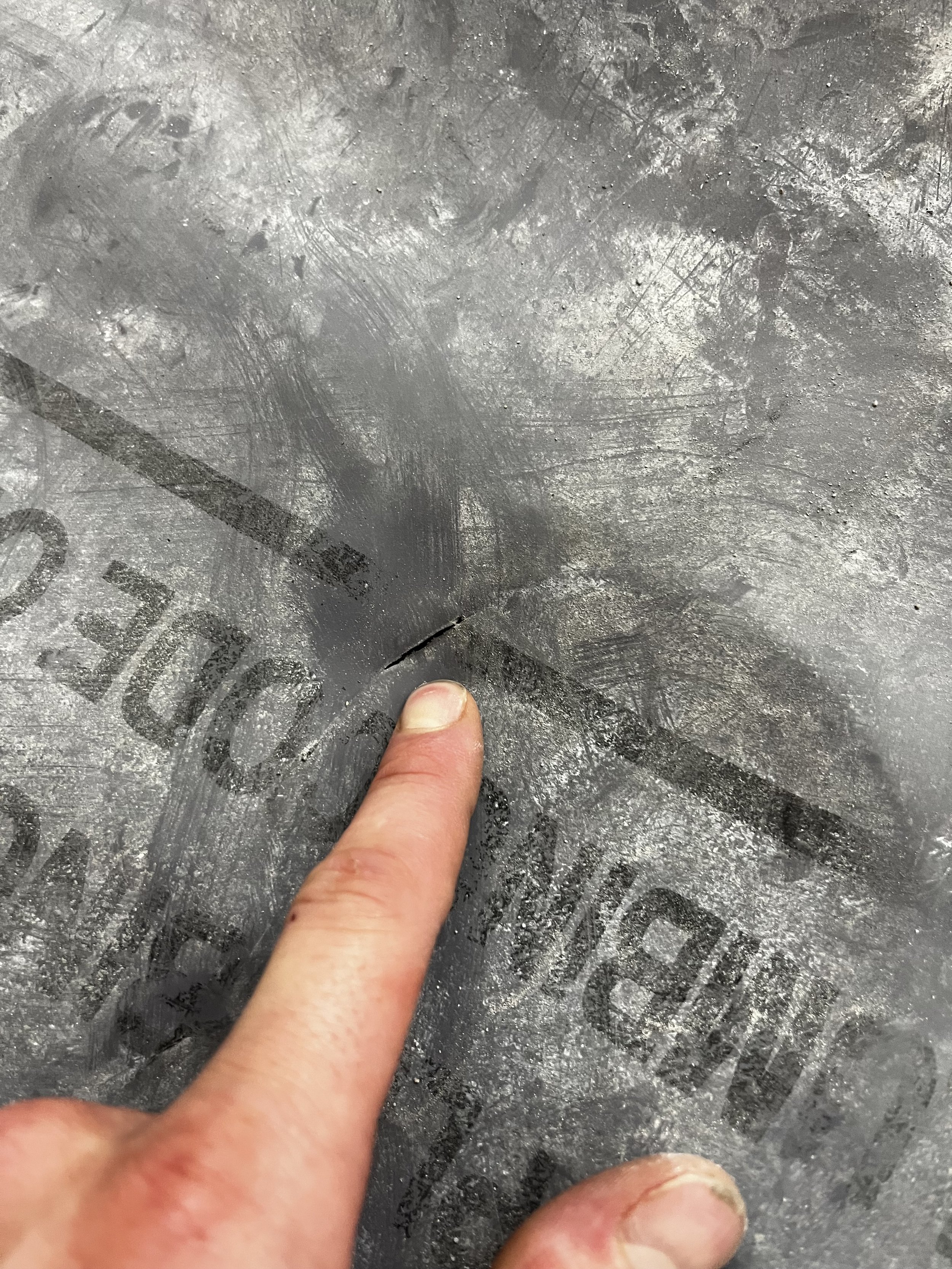
A leakage point found after removing original shower.
Trust Isn't About Being Nice—It's About Being Clear…
When homeowners ask me how they know whether they can trust a contractor, my answer usually surprises them.
I don't start by talking about licenses or awards.
I start by listening to how they answer questions.
As the owner of a design-build remodeling company, I know roughly what a bathroom remodel, kitchen remodel, or basement finish should cost within minutes of understanding the general scope. I won’t not know the exact number until we've measured the space, finalized material selections, and finalized scope, but I absolutely know the realistic investment range, the typical timeline, and the process it will take to get there.
That's what experience sounds like.
A trustworthy contractor should be able to confidently explain:
Typical investment ranges
Expected timelines
Their construction process
Scheduling
Communication
Project management
Potential challenges
That doesn't mean they should pretend to know everything.
There's a huge difference between saying:
"From a historical context, projects similar to yours range between these costs."
and simply saying:
"I'm not sure."
Experienced contractors know which answers they can give immediately, and which answers require investigation.
If someone struggles to explain their own process, that's worth paying attention to.
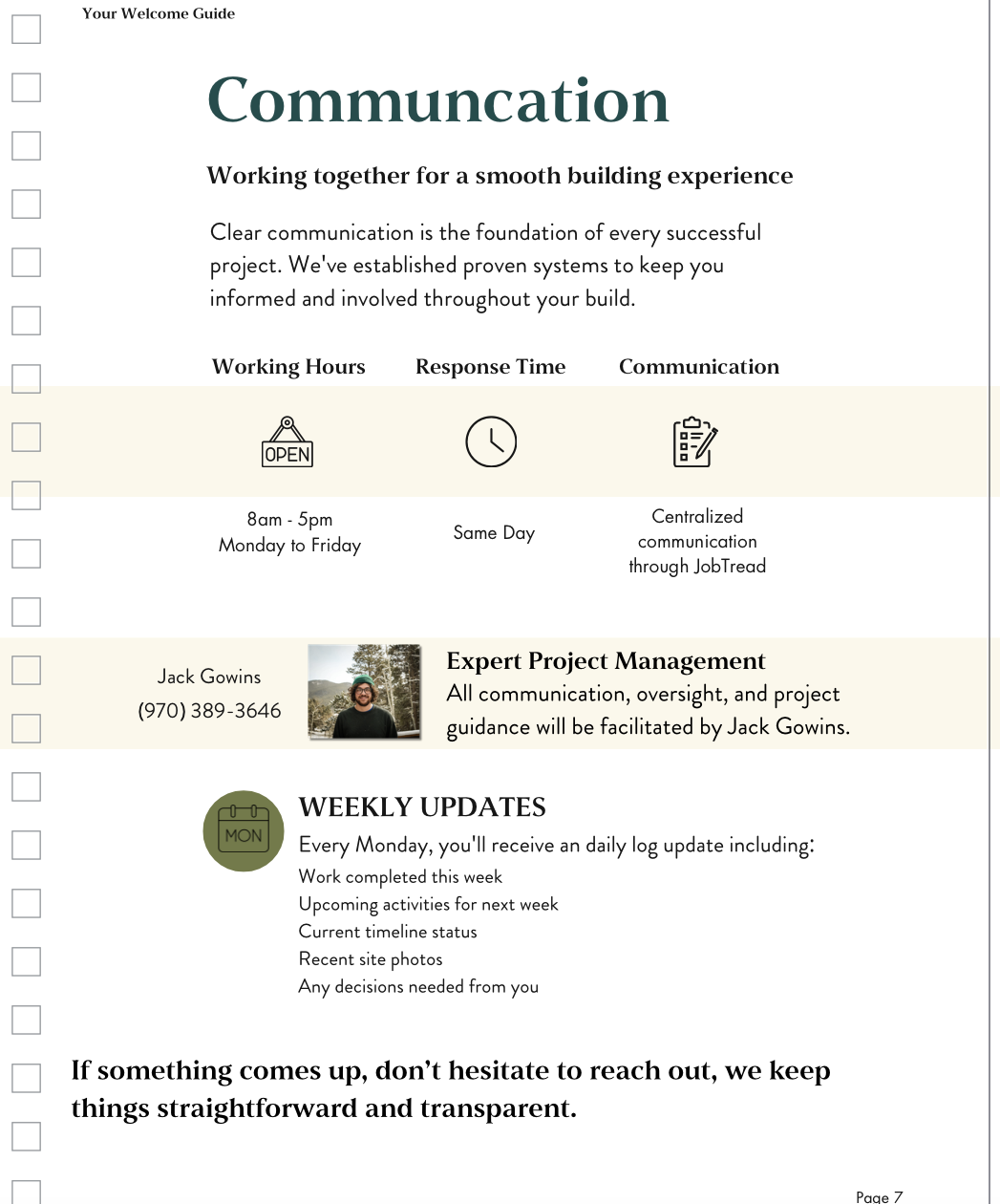
Here’s our “Communication” page from our welcome guide when homeowners sign a project with us. Making clear expectations of the remodeling experience might be the most important aspect to us!
Compare What's Included—Not Just the Price…
One of the biggest misconceptions I see is homeowners comparing remodeling proposals strictly by price.
It's understandable.
If one estimate comes in significantly lower than another, it's tempting to assume you're simply getting a better deal.
But here's the question I always ask:
Are you actually comparing the same project?
Often the answer is no.
One proposal may include:
Design services
Material procurement
Permitting
Project management
Daily communication
Specialized building materials
Cleanup
Finish materials
Another may include only labor.
I've had homeowners tell me another contractor was significantly less expensive, only to discover they hadn't received a detailed proposal at all.
They didn't really know what was included.
A remodeling proposal without a clearly defined scope isn't really a proposal.
It's a guess.
Before comparing prices, compare exactly what each contractor is promising to deliver.
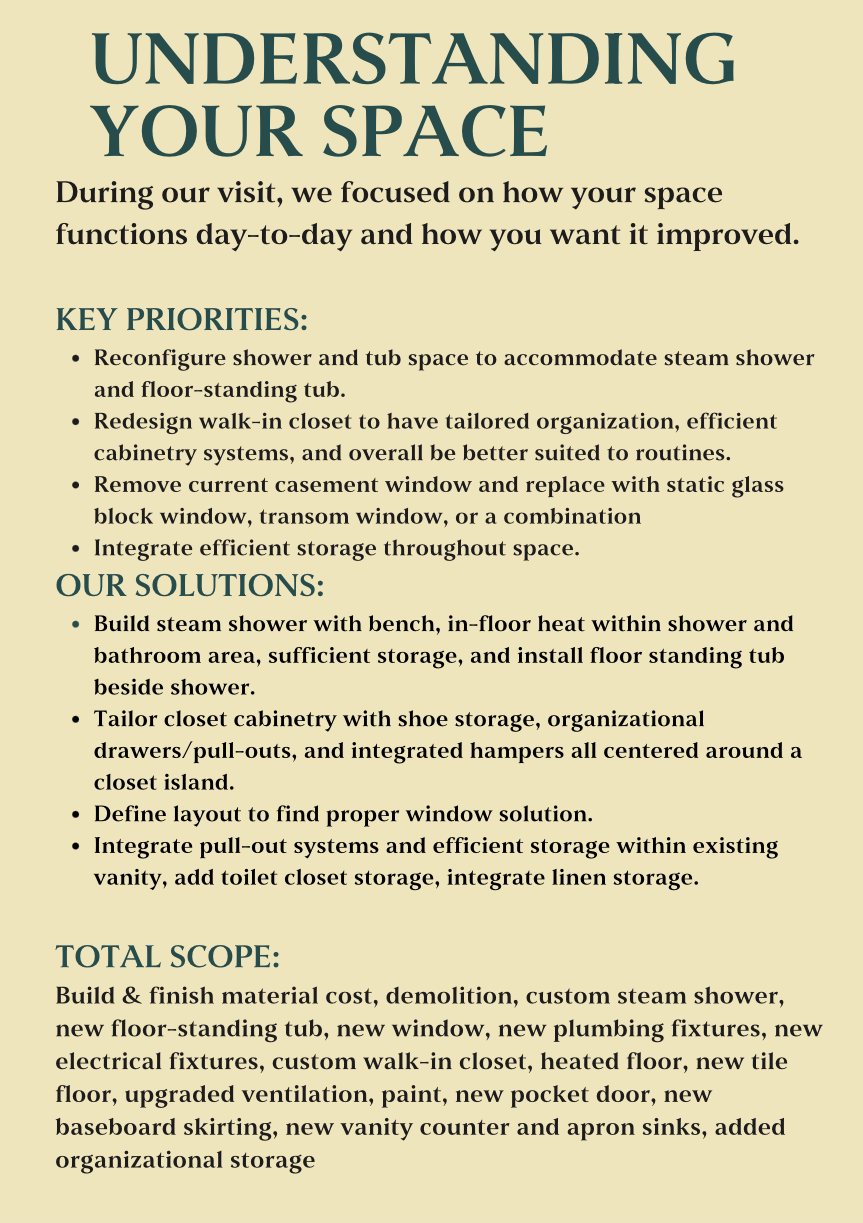
Here’s our “Understanding Your Space” page from our project summary packet after our at-home consultation. This shows our client exactly where we’re at in our thinking and everything we’re factoring in to the estimated cost.
The Best Contractors Educate You…
I always encourage homeowners to spend some time researching before scheduling estimates.
No, you don't need to become a contractor.
But becoming an informed homeowner changes everything.
Learn what bathroom remodels typically cost.
Learn the basics of shower waterproofing.
Understand how long projects usually take.
Read about common remodeling mistakes.
The more informed you are, the better questions you'll ask.
Ironically, good contractors usually enjoy working with educated homeowners because conversations become more productive and expectations become much clearer.
Ultimately, it's our job to educate you.
But coming into the conversation with some foundational knowledge helps you make a much more confident decision.
Ask Them to Explain How They Build…
Every contractor says they build quality projects.
Instead of asking if they're good...
Ask how they build.
Ask questions like:
What building systems do you use?
Why do you build showers, cabinets, walls, etc. that way?
How is the space built-to-last?
What's your process if you discover an unforeseen issue?
Don't worry if you don't understand every technical detail.
Pay attention to how they explain it.
A knowledgeable contractor should be able to teach you.
If they hesitate, avoid specifics, or seem uncomfortable explaining their own process, that's worth noticing.
Your home deserves more than vague answers.
The Remodeling Experience Matters More Than Most Contractors Realize…
This may be my biggest opinion about the remodeling industry.
I actually think the homeowner experience matters just as much as the craftsmanship.
Now don't misunderstand me.
Craftsmanship has to be exceptional.
That's the baseline.
Beautiful tile work, quality cabinetry, proper waterproofing, and durable construction should be expected.
The difference between average companies and truly exceptional ones is everything surrounding the construction.
Communication. Scheduling. Project management. Setting expectations. Keeping promises.
One of the compliments we hear most often from homeowners is how much they appreciated our communication.
Daily updates. Clear schedules. Knowing who will be on-site. Knowing what's happening next.
That removes an incredible amount of stress.
A beautiful remodel is wonderful.
A beautiful remodel that never leaves you wondering what's happening tomorrow is even better.
Don't Rush Just Because Someone Can Start Tomorrow…
Years ago, I spoke with a homeowner planning a whole-home remodel.
We had a great conversation.
He appreciated our design-build process and the planning that goes into our projects.
Ultimately, he chose another contractor because they could begin sooner.
I understood the decision.
Everyone wants to get started.
But sometimes the contractor asking for a little more time isn't delaying your project—they're preparing it.
Architectural planning. Engineering. Material selections. Scheduling. Permitting.
Those things often prevent delays later.
Sometimes the fastest start doesn't produce the fastest finish.
Design Solves Problems Before Construction Ever Begins…
One project perfectly reinforced why I believe so strongly in design-build remodeling.
We were converting a large garden tub into a wet room with a Japanese soaking tub.
The space was tight.
On paper, several tubs looked like they would work.
Once we modeled everything in CAD, we realized many of those tubs would have made the room feel cramped or simply wouldn't function the way the homeowner envisioned.
Because we caught the issue during design, we found a better tub, adjusted the layout, and created a space that worked beautifully.
Imagine discovering that after tile was installed.
That's exactly why thoughtful planning matters.
It's always less expensive to solve problems on a computer than it is to solve them in someone's home.
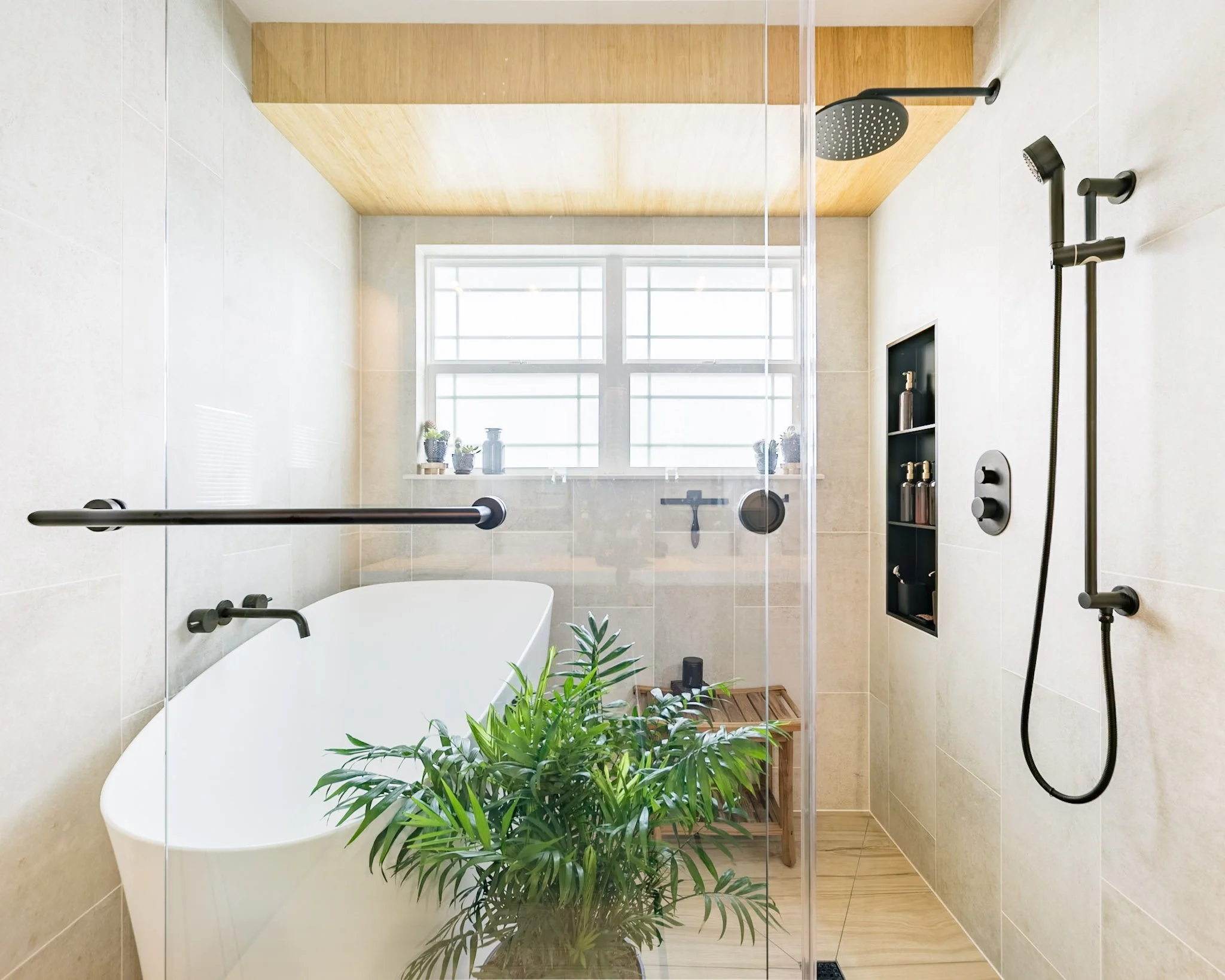
Our very specific tub to fit the wet room space.
Reviews Matter—But Look Beyond the Star Rating…
Reviews are important. So are photos. So is a professional website.
When I were looking for a contractor in another city, I'd absolutely research:
Google Reviews
Facebook Reviews
Reddit discussions
Yelp
Project photos
Their website
Whether other reputable businesses reference them
But don't stop at the star rating.
Read what people actually say.
Do they mention communication? Organization? Scheduling? Professionalism? Problem-solving?
Those qualities tell you far more about what working with that company will actually feel like.
Finally, ask yourself one simple question:
Do these people feel like my people?
Remodeling is personal.
You'll spend weeks or months working together.
You should trust them—and genuinely enjoy working with them.
Remember: Your Contractor Works for You…
If there's one thing I hope every homeowner remembers, it's this:
Don't let contractors run around you.
This is your home. Your investment. Your family. Ask questions. Expect communication.
If something feels unclear, say so.
If expectations aren't being met, speak up.
A good contractor won't be offended.
Personally, I'd much rather a homeowner tell me they're concerned so I can address it than have them quietly worry throughout the project.
Remodeling is a service business.
The client experience should always matter.
At the end of every project, my favorite moments aren't installing the last piece of tile.
They're standing beside homeowners as they see their completed space for the first time.
I've had people literally jump up and down with excitement.
Not just because they loved the finished bathroom—but because they enjoyed the journey that got them there.
That's what great remodeling should feel like.
Beautiful craftsmanship. Clear communication. Thoughtful planning.
And complete confidence that your home was cared for every step of the way.
