
Architectural Wall Paneling: Decorative layering meets Functional Design System
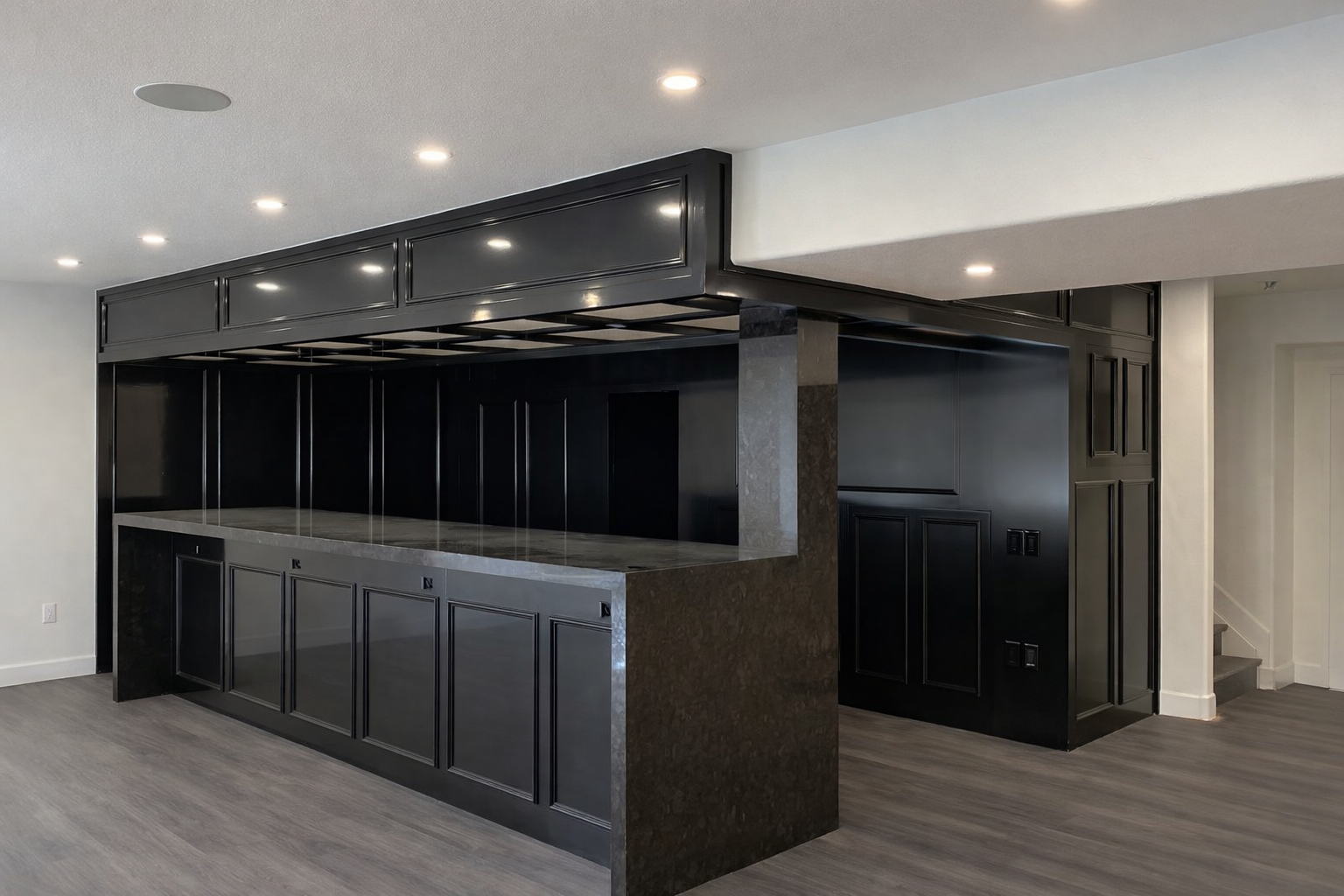
Full-height paneled millwork with integrated cabinetry and stone surfaces
Wall paneling has been a household name in statement wall finishes inside of high-end homes for centuries. Trim treatments have long been a mark of distinction, bringing structure, rhythm, and depth to interior spaces. At Basin, we love helping homeowners achieve this storied look, and we understand the appeal; not only for its classic presence, but for what paneling can do when designed thoughtfully.
Historically, paneled rooms were formal and decorative. Today, they are increasingly designed as functional architectural systems; where walls do more than define space. When paneling is planned as part of the overall layout, it becomes the framework that allows doors, storage, lighting, and millwork to exist without visual interruption.
The above image is a beautiful example of this approach. What at first glance looks like a bold, fully paneled architectural feature is actually a highly integrated wet bar. Cabinetry, upper storage, and service zones are all aligned within the panel grid, allowing the space to function as a bar, storage wall, and visual anchor without feeling cluttered or overbuilt. Stone surfaces and millwork are coordinated so that materials feel intentional rather than layered on.
We increasingly see paneled rooms not just as classic and stately environments, but as modern, highly functional interiors; where hidden doors, integrated cabinetry, and lighting are designed to disappear into the panel pattern itself. Closet and entry doors can be flush-set and aligned directly within panel reveals. Pivot-style doors turn ordinary transitions (into bathrooms, closets, or secondary rooms) into subtle architectural moments rather than obvious openings.
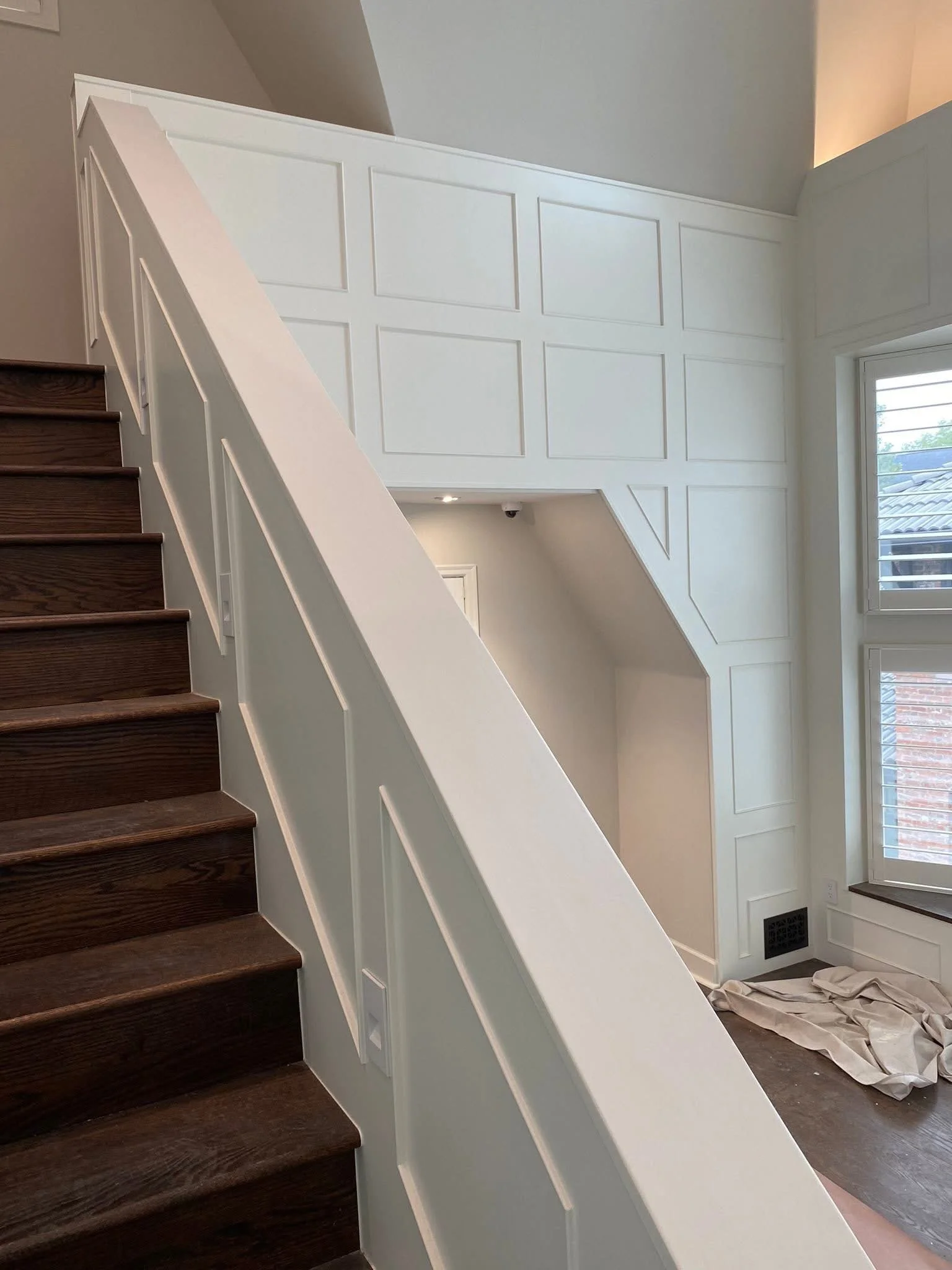
Staircase wall paneling with integrated geometry
The above image illustr how paneling can solve complex architectural conditions. Sloped ceilings, stair runs, and irregular wall planes are often difficult to finish cleanly. Paneling allows these conditions to be resolved with consistent proportions and intentional geometry. Instead of drywall transitions and patchwork trim, the panel layout absorbs these changes and makes them feel deliberate.
Paneling also provides an ideal framework for built-in storage and functional elements. Cabinets, drawers, benches, shelving, and even under-stair storage can be incorporated directly into the wall system. When spacing, depths, and reveals are coordinated, these elements don’t read as add-ons, they read as part of the architecture.
Lighting is another area where paneling excels. Concealed LED channels, recessed uplighting, and shadow reveals can be integrated into panel assemblies to add depth and warmth without introducing visible fixtures. This allows the room to feel layered and dimensional while remaining visually calm.
(Video reference: Integrated paneling with concealed doors and millwork)
The accompanying video shows how these ideas come together in motion. Pocket doors disappear into paneled walls, revealing functional spaces like bars or storage zones only when needed. When closed, the room returns to a clean, uninterrupted elevation. This level of integration is where paneling truly bridges classic craftsmanship and modern living.
From a construction standpoint, architectural paneling requires early coordination. Framing tolerances, substrate preparation, door hardware, electrical layouts, and finish sequencing all need to be resolved before installation begins. When done correctly, the result is not just a beautiful wall, but a durable, efficient system that improves how the space functions long-term.
At Basin, we approach paneling as part of our broader design-build process. We plan these systems early so that storage needs, circulation, lighting, and transitions are fully integrated—not forced later. The goal is always the same: spaces that feel timeless and refined, while working effortlessly for the people who live in them.
If you’re considering architectural wall paneling, whether as a statement feature or as a way to integrate storage, doors, or lighting, we’re happy to walk through the possibilities with you. With the right planning, paneling becomes more than a finish; it becomes the backbone of a well-designed room.
